A lot of small offices and shops start out on a home broadband plan simply because it's what was already installed. That's fine for some businesses — and a real problem for others.
What a home broadband plan is built for
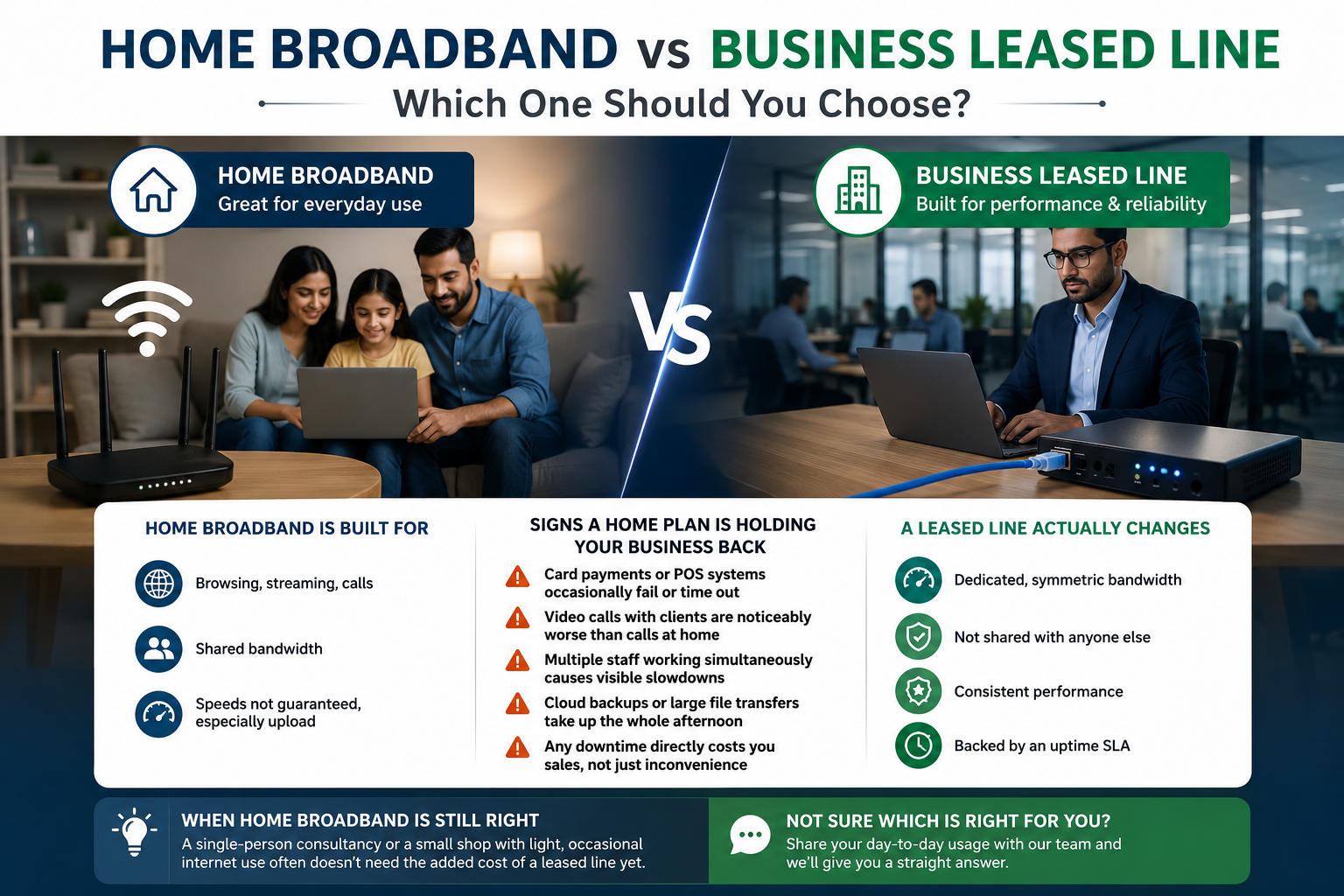
Home plans are priced and provisioned for typical household use: browsing, streaming, calls. They're shared with other users on the same local network segment, and speeds — especially upload — are usually not guaranteed.
What a leased line actually changes
A business leased line gives you dedicated, symmetric bandwidth that isn't shared with anyone else — what you're paying for is what you get, consistently, backed by an uptime SLA.
Signs a home plan is holding your business back
- Card payments or POS systems occasionally fail or time out
- Video calls with clients are noticeably worse than calls at home
- Multiple staff working simultaneously causes visible slowdowns
- Cloud backups or large file transfers take up the whole afternoon
- Any downtime directly costs you sales, not just inconvenience
When a home plan is still the right call
A single-person consultancy or a small shop with light, occasional internet use often doesn't need the added cost of a leased line yet — and that's a perfectly reasonable place to stay until the business grows into it.
Not sure which side of that line your business is on? Share what your day-to-day usage looks like and our team will give you a straight answer — not just the more expensive option.
Thinking about it as a cost, not just a price
A leased line costs more per month than a home plan on paper — but that's only half the comparison. Every failed card payment, every client call that drops, every hour staff lose to a slow connection has a real cost too, even if it never shows up as a line item. For a growing business, the right question usually isn't "what's cheaper this month" but "what's actually cheaper once downtime and lost sales are counted in."